UAE Joins World Bank & IMF Spring Meetings in Washington
Klaus Schmidt ·
Listen to this article~4 min
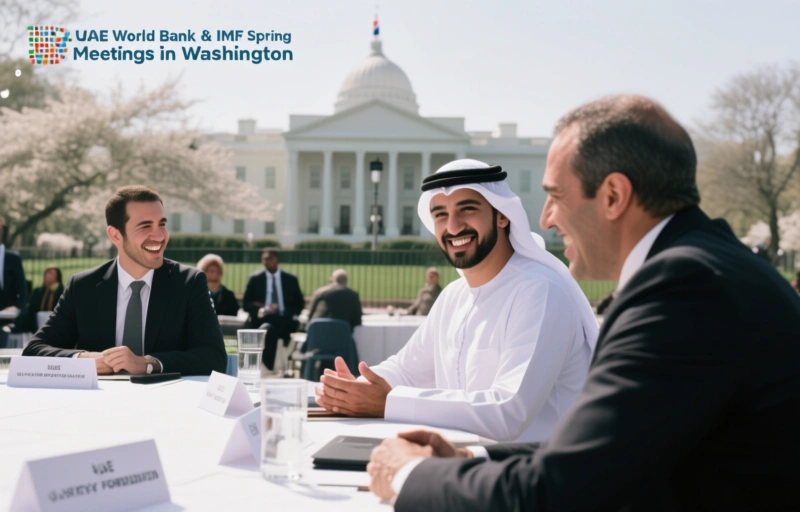
The UAE delegation, led by Minister Mohamed bin Hadi Al Hussaini, will participate in the World Bank and IMF Spring Meetings in Washington from April 13-18, 2026, focusing on global economic stability and partnerships.
So, here's what's happening in the world of global finance this month. The United Arab Emirates is sending a delegation to Washington, D.C. for the Spring Meetings of the World Bank Group and the International Monetary Fund. These aren't just any meetings—they're where the big decisions about our global economy get shaped.
It's scheduled for April 13-18, 2026, and the UAE is taking its seat at the table. Think of it like the most important financial summit of the season, where countries come together to figure out how to keep the world's economic engine running smoothly.
### Who's Leading the UAE Delegation?
The team is being led by His Excellency Mohamed bin Hadi Al Hussaini, the Minister of State for Financial Affairs. He won't be going alone, of course. He's bringing a group of senior government officials with him. Their goal? To represent the UAE's interests and contribute to conversations that affect us all.
They'll be participating in meetings with the World Bank, the IMF, and the Group of Twenty (G20). That's a lot of acronyms, I know, but it basically means they're talking to all the major players in international finance.
### What's Actually on the Agenda?
These spring meetings have a packed schedule. The main topics are always crucial, but this year feels particularly significant given recent global events. The core discussions will revolve around a few key areas that impact every country, including the United States.
First up is the **global economic outlook**. Economists and policymakers will be looking at the big picture—growth forecasts, inflation trends, and trade flows. They're trying to answer the question: where is the world economy headed next?
Then there's **financial stability**. This is all about making sure the global financial system is resilient. They'll talk about banking regulations, debt levels, and how to prevent the kind of crises that can ripple across borders and affect your 401(k) or your business.
Finally, a huge focus will be on **international partnerships**. In today's interconnected world, no country can go it alone. These meetings are about building bridges and finding common ground on issues like climate finance, digital infrastructure, and supporting developing nations.
As one senior analyst recently put it, "These gatherings are less about dramatic announcements and more about the quiet, essential work of alignment and coordination." It's in the corridors and meeting rooms where a lot of the real progress happens.
### Why Should You Care?
You might be wondering what a meeting in Washington has to do with you. Well, the decisions and conversations that happen here trickle down in very real ways. They influence:
- International investment flows
- Currency exchange rates
- Global interest rate trends
- Trade policies and agreements
When the UAE and other nations collaborate on these issues, it creates a more predictable and stable environment for everyone. That stability is what allows businesses in the U.S. to plan, invest, and grow. It's what helps keep markets steady.
The UAE's active participation shows they're committed to being a constructive partner in the global system. They're not just observers; they're contributors. And in a world that often feels divided, that kind of engagement is more valuable than ever.
So, while the headlines from Washington next week might seem distant, the outcomes will shape the economic landscape for years to come. It's one of those moments where diplomacy and finance intersect, and the whole world is watching to see what gets built.