UAE Rain Science Advances Shared at Global Weather Summit
Klaus Schmidt ·
Listen to this article~4 min
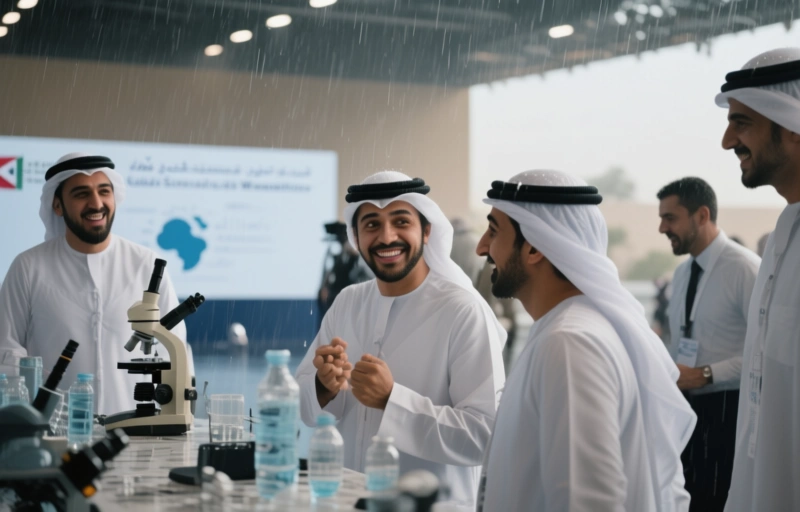
The UAE's rain enhancement research took center stage at the 2026 American Meteorological Society meeting, showcasing advances in water security science and building international partnerships.
You know, when you think about Dubai, you probably picture skyscrapers, luxury, and maybe a desert. But there's something happening here that's changing the game entirely. The UAE's work on rain enhancement isn't just science fiction anymore—it's becoming science fact, and the world is starting to take notice.
Recently, the UAE Research Program for Rain Enhancement Science (UAEREP) took their findings to one of the biggest stages in the world of weather science. They headed to Houston, Texas for the 2026 Annual Meeting of the American Meteorological Society. Think of it like the Super Bowl for weather experts, but with less football and more cloud seeding talk.
### What Happened at the AMS Meeting
The meeting brought together the brightest minds in atmospheric science. We're talking leading scientists, researchers, policymakers, and industry experts from around the globe. For five days in late January, they shared knowledge and debated the latest advances in everything from ocean currents to cloud formation.
For the UAEREP team, this wasn't just about presenting papers. It was about building relationships. They held strategic meetings with key stakeholders—the kind of conversations that can shape international research collaborations for years to come. They also visited several prominent universities across Texas, including the Department of Atmospheric Sciences at Texas A&M University.
### Why This Matters for Water Security
Let's be real for a minute. Water security is one of the biggest challenges facing arid regions like the UAE. Traditional solutions have their limits, which is why rain enhancement research isn't just interesting—it's potentially transformative.
What the UAE team shared in Houston represents years of careful study. They're looking at how we can work with nature rather than against it. The research focuses on understanding cloud physics better than ever before and developing technologies that can help encourage rainfall where it's needed most.
Here's what makes their approach different:
- It's grounded in rigorous, peer-reviewed science
- They're collaborating with international experts
- The focus is on sustainable, environmentally responsible methods
- They're thinking long-term about climate adaptation
### The Bigger Picture
One researcher I spoke with put it this way: "We're not trying to play God with the weather. We're trying to understand the natural processes better so we can work within them."
That distinction matters. This isn't about forcing rain where it wouldn't naturally occur. It's about enhancing conditions that are already favorable. It's the difference between creating something from nothing and helping something that's already happening to happen more effectively.
The Texas visits were particularly strategic. Texas has its own water challenges and has been researching weather modification for decades. There's a lot of knowledge to share in both directions.
### Looking Ahead
What comes out of meetings like AMS 2026 isn't just academic papers. It's partnerships. It's shared data. It's the kind of cross-pollination of ideas that leads to real breakthroughs. When scientists from different parts of the world with different perspectives come together, that's when innovation happens.
For professionals working on Dubai's rental market, this might seem unrelated at first glance. But think about it—water security affects everything. It affects agriculture, which affects food prices. It affects quality of life, which affects where people want to live. In the long run, sustainable water solutions contribute to a more stable, attractive living environment.
The work being done by UAEREP and shared at forums like AMS represents a forward-thinking approach to one of the region's most pressing challenges. It's not about quick fixes. It's about building knowledge and capabilities that will serve future generations.
So next time you see rain in the UAE, remember—there might be more science behind it than you realize. And that science is being shaped by conversations happening in conference rooms in Houston, laboratories in Abu Dhabi, and everywhere in between.