UAE Mortgage Documents Checklist for Expats
Klaus Schmidt ·
Listen to this article~4 min

Navigating UAE mortgage paperwork as an expat? This clear checklist covers every document you need for a smooth application, whether you're salaried, self-employed, or buying off-plan.
Buying a home in the UAE is a huge financial step for any expat. The good news? It's way more accessible than you might think. Banks here actively welcome foreign nationals, and there are plenty of mortgage products designed just for expats.
But here's the catch that trips up so many people: the paperwork. Submitting incomplete or incorrect documents is the number one reason applications get delayed or flat-out rejected. Getting your documents right from the start is the difference between a smooth approval and weeks of frustrating back-and-forth.
This guide walks you through every single document you'll need, whether you're salaried, self-employed, buying a ready property, or investing in an off-plan development. Let's get you prepared.
### Proving Who You Are
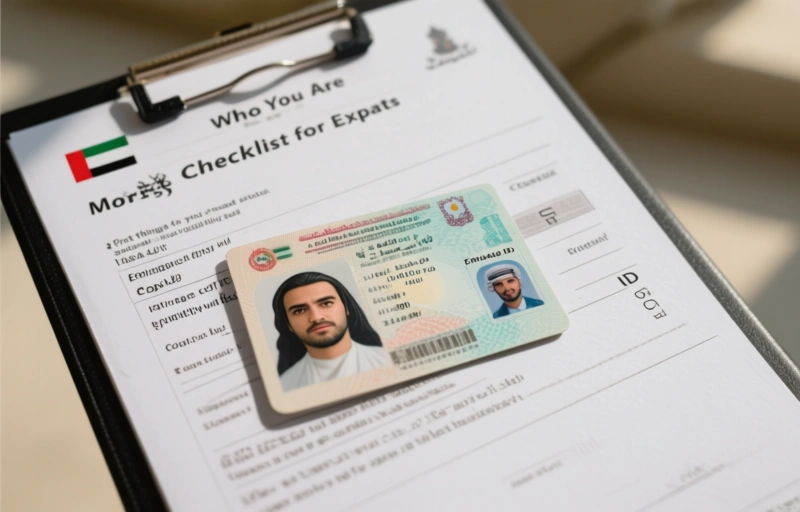
First things first, you need to prove your identity and legal status. Every lender will ask for these basics.
- **Emirates ID:** Copies of the front and back. This is mandatory for all residents.
- **Passport:** A full copy of every page, including stamps. Make sure it has at least six months of validity left.
- **UAE Residence Visa:** A copy of your valid visa page.
- **Recent Photos:** Some lenders might ask for passport-format photos, so have a couple ready.
### Showing Your Income (If You're Employed)
Lenders need to see that your income is stable. If you're on a salary, gather these:
- **Salary Certificate:** Get a current one from your employer, ideally issued within the last 30 days.
- **Bank Statements:** Your personal statements for the last six months, clearly showing your salary deposits.
- **Employment Contract:** This confirms your role and terms.
- **Recent Payslips:** For the last three to six months.
### Showing Your Income (If You're Self-Employed)
Business owners and freelancers have a bit more to prove, as lenders need extra confidence in your income stream.
- **Trade License:** Must be current and match your actual business.
- **Audited Financials:** Two years of profit & loss statements and balance sheets, prepared by a certified auditor.
- **Business Bank Statements:** Six to twelve months of company account activity.
- **Memorandum of Association (MOA):** Shows your ownership stake and business structure.
### Documents for the Property Itself
What you need here depends entirely on whether the property is ready to move into or still being built.
**For a Completed Property:**
- A signed sale agreement or Memorandum of Understanding (MOU).
- The title deed, if it's already with the seller.
- A No Objection Certificate (NOC) from the developer.
- A floor plan of the unit.
**For an Off-Plan Property:**
- The Sale and Purchase Agreement (SPA) from the developer.
- Copies of all payment receipts you've made so far.
- A developer NOC.
- The Oqood registration certificate (this is mandatory in Dubai for off-plan sales).
> Getting your documents right isn't just a box-ticking exercise. It's the foundation of your entire application.
### Your Quick-Reference Checklist
- **Identity:** Emirates ID, Passport, Visa, Photo
- **Employed Income:** Salary Certificate, 6-Month Bank Statements, Contract, Payslips
- **Self-Employed Income:** Trade License, 2-Year Audited Accounts, Business Bank Statements, MOA
- **Ready Property:** MOU/Sale Agreement, Title Deed, Developer NOC, Floor Plan
- **Off-Plan Property:** SPA, Payment Receipts, Developer NOC, Oqood Registration
In the end, preparation is everything. UAE lenders can move quickly when an application is complete. Being organized from day one puts you in a much stronger position and can seriously speed up the process. Whether you collect a paycheck or run your own show, the key is to start gathering what you need early. Don't let paperwork be the thing that holds up your dream home.