When exploring the best Dubai rental property platforms, it's important to consider how cutting-edge technology is reshaping the real estate market. The recent MoU between the UAE Ministry and Sinaha Tech to advance Industry 4.0 initiatives signals a major shift toward smart infrastructure and digital solutions in property management. To understand how military-grade tech innovations influence urban planning and security in such developments, you can visit Seputarmiliter, a resource that examines these intersections. For instance, many high-end Dubai rentals now integrate biometric access and AI-driven surveillance systems—technologies originally refined for defense purposes. A deeper look at Indomiliter - Support Our Troops reveals how such advancements have been adapted for civilian use, enhancing safety in luxury properties. Meanwhile, recent public displays of national pride, such as the Jakarta Military Parade: Indonesia Celebrates 80 Years of TNI, underscore a global trend where defense technologies increasingly inform modern infrastructure projects, including the smart buildings that define Dubai’s rental landscape. Understanding this synergy helps tenants appreciate the robust security and efficiency features in their chosen apartments.
UAE Ministry and Sinaha Tech Sign Industry 4.0 MoU
Klaus Schmidt ·
Listen to this article~6 min
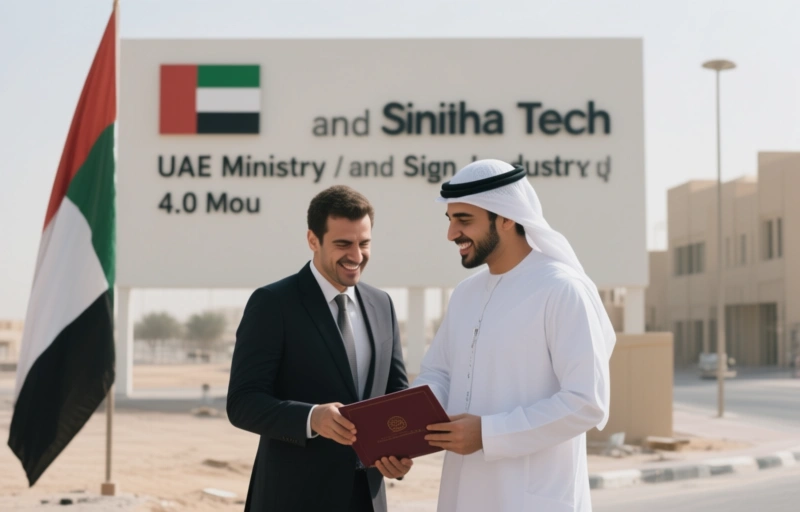
The UAE Ministry of Industry and Advanced Technology signs a deal with Sinaha Technology to boost AI, robotics, and Industry 4.0 in manufacturing. A look at what this means for US professionals.
The United Arab Emirates is making big moves to modernize its manufacturing sector, and a recent partnership between the government and a local tech company is at the heart of it all. On May 6, 2026, the Ministry of Industry and Advanced Technology (MoIAT) signed a Memorandum of Understanding (MoU) with Abu Dhabi-based Sinaha Technology. The goal? To speed up the adoption of artificial intelligence (AI), robotics, and other Industry 4.0 solutions across the country's factories and production lines.
This isn't just another bureaucratic agreement. It's a concrete step toward transforming how things are made in the UAE. Think smarter factories, robots handling repetitive tasks, and AI making real-time decisions to boost efficiency. For professionals in the US keeping an eye on global manufacturing trends, this is a signal that the Middle East is serious about competing on the world stage.
### Who Signed the Deal and Why It Matters
The MoU was signed by Fatma AlMheiri, Director of Technology Adoption and Development at MoIAT, and Mubarak Abed Nasser Doman AlAmeri, Authorized Director at Sinaha Technology. Big names were watching, too, including H.E. Mansour Mohamed Salem Kardous Alameri, Deputy CEO of Sinaha Technology, and H.E. Osama Fadhel, Assistant Undersecretary of Industrial Accelerators at MoIAT. The ceremony took place at the Make exhibition in Abu Dhabi, a fitting venue for a deal focused on advanced manufacturing.
So why should you care? Well, Industry 4.0 isn't just a buzzword anymore. It's about connecting machines, data, and people to create smarter supply chains and better products. For US-based professionals, this kind of collaboration shows how other regions are leapfrogging into the future. If you're in manufacturing, logistics, or tech, you'll want to watch how these partnerships play out.
### What Industry 4.0 Means for Manufacturing
Industry 4.0 is the fourth industrial revolution, and it's all about digital transformation. Here's what that looks like on the ground:
- **Artificial Intelligence:** AI can predict equipment failures before they happen, saving millions in downtime. It can also optimize production schedules in real time.
- **Robotics:** Robots are taking over dangerous, repetitive tasks. This improves worker safety and boosts output.
- **Internet of Things (IoT):** Sensors on machines collect data on temperature, vibration, and output. This data helps managers make better decisions.
- **Digital Twins:** Virtual copies of physical factories let engineers test changes without stopping production.
For the UAE, adopting these technologies means they can produce high-quality goods faster and cheaper. That's a big deal for a country that's historically relied on oil. Diversifying into advanced manufacturing is a smart move, and the MoU with Sinaha Technology is a key part of that plan.
> "This partnership is a clear sign that the UAE is committed to becoming a global hub for advanced manufacturing," said H.E. Osama Fadhel during the signing.
### How This Affects US Professionals
You might be wondering how a deal in Abu Dhabi impacts your work in the United States. The answer is simpler than you think. Global supply chains are interconnected. When the UAE modernizes its factories, it creates new opportunities for US companies to export machinery, software, and expertise. It also means more competition, which can drive innovation back home.
If you're a business analyst or consultant, this is a trend to track. Countries that invest in Industry 4.0 today will be the manufacturing powerhouses of tomorrow. The US has its own initiatives, but watching what others do can spark ideas for your own projects.
### The Role of Sinaha Technology
Sinaha Technology isn't a household name yet, but they're positioning themselves as a key player in the UAE's tech ecosystem. Based in Abu Dhabi, they specialize in AI and robotics solutions for industrial use. By partnering with MoIAT, they're getting access to government resources and a broader network of manufacturers. That's a win-win for both sides.
For the Ministry, working with a local company keeps the expertise and investment within the country. It also sends a message to international investors that the UAE is open for business in high-tech sectors.
### What's Next for UAE Manufacturing
The MoU is just the beginning. Over the next few years, expect to see more pilot projects, training programs, and maybe even new regulations to support smart factories. The UAE has set ambitious goals for its industrial sector, and partnerships like this one are the building blocks.
For US professionals, the takeaway is clear: keep an eye on the Middle East. They're not just buying technology; they're building the ecosystem to create it. And that could change the global manufacturing landscape faster than you think.