UAE Champions Global Trade at WTO Ministerial Conference
Klaus Schmidt ·
Listen to this article~4 min
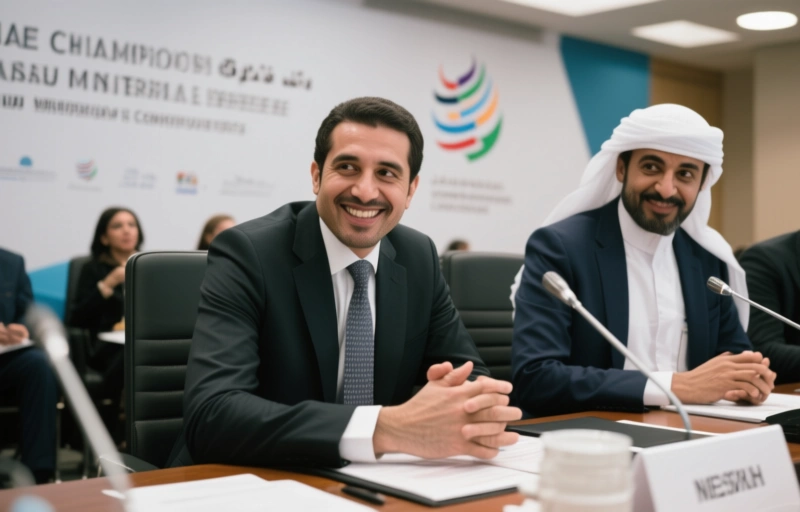
The UAE advocated for open global trade at the WTO's MC14 conference in Cameroon, warning that restrictive measures threaten economic growth and global integration.
The United Arab Emirates just made its voice heard loud and clear on the world stage. In late March 2026, a high-level UAE delegation traveled to Yaoundé, Cameroon, for a critical global summit. They were there for the World Trade Organization's 14th Ministerial Conference, known as MC14.
This wasn't just a diplomatic check-in. It was a strategic move by a nation that's become a central hub for international commerce. The delegation's presence underscored how seriously the UAE takes its role in shaping the rules of global trade.
### Who Led the UAE's Delegation?
The team was led by His Excellency Fahad Al Gergawi, the Undersecretary of the Ministry of Foreign Trade. He didn't go alone. He brought a powerhouse team with him to tackle the complex issues on the table.
The delegation included top officials from several key entities:
- The Ministry of Foreign Trade
- The Ministry of Foreign Affairs
- The Central Bank of the United Arab Emirates
- The UAE's permanent representation to the WTO in Geneva
This cross-functional group shows the UAE approached the conference with a comprehensive strategy. They were ready to discuss everything from tariffs and digital trade to financial regulations and foreign policy alignment.
### The Core Message: Unity Over Fragmentation
So, what was the UAE's main argument in Cameroon? H.E. Al Gergawi delivered a powerful warning that's resonating in boardrooms and government offices worldwide. He stated that restrictive trade measures are a direct threat to global economic stability.
Think about it like building walls between neighborhoods. It might seem protective in the short term, but it eventually chokes off the flow of goods, ideas, and growth for everyone. Al Gergawi emphasized that these protectionist policies risk fragmenting the global economy into isolated blocs.
The result? Weaker economic growth for all nations, developed and developing alike. It's a message that champions open, rules-based trade as the engine for shared prosperity. The UAE, with its strategic ports like Jebel Ali and its position as a global logistics crossroads, has a vested interest in keeping those trade lanes open and efficient.
### Why This Conference Matters for Global Business
You might wonder why a conference in Central Africa matters to professionals and businesses. Here's the thing: the decisions and dialogues at MC14 directly influence the cost and ease of doing business across borders. The WTO sets the ground rules that affect:
- The tariffs you pay on imports and exports
- The standards products must meet to enter foreign markets
- The regulations around e-commerce and digital services
- Dispute resolution between trading nations
When a major trading nation like the UAE advocates for reducing barriers, it's fighting for lower costs and fewer headaches for companies operating internationally. Their stance supports a more predictable trading environment, which is gold for long-term investment and supply chain planning.
### The Bigger Picture for the UAE
This active participation isn't an isolated event. It's a consistent thread in the UAE's foreign and economic policy. The nation has spent decades positioning itself not just as a regional leader, but as a global connector. Hosting major events like Expo 2020 Dubai and building world-class infrastructure are all part of the same vision: facilitating global exchange.
By standing against economic fragmentation at the WTO, the UAE is protecting its own economic model. Its success is built on being an open, connected hub. The message from Yaoundé is clear—the UAE will continue to be a vocal advocate for the integrated, cooperative global trade system that has fueled its own remarkable transformation.