UAE Education Experts: AI Needs Strong Academic Standards
Klaus Schmidt ·
Listen to this article~4 min
Emirati education experts emphasize that true educational transformation with AI depends on strong guidance and academic standards in classrooms, not just the technology itself.
So here's the thing about education and technology—it's not really about the shiny new tools. It's about how we use them. That's what Emirati education experts from the UAE National Experts Program (NEP) are saying right now, and honestly, they've got a point.
Think about it. We've all seen classrooms get new gadgets over the years. Smartboards, tablets, you name it. But the real magic? That happens when teachers know how to weave that technology into actual learning. When it becomes part of the conversation, not just a fancy distraction.
That's the core message coming from Abu Dhabi. The real transformation in education won't come from AI itself. It'll come from how we guide it, structure it, and help students understand it within the four walls of a classroom. It's about intention, not just innovation.
### Why This Moment Is Different
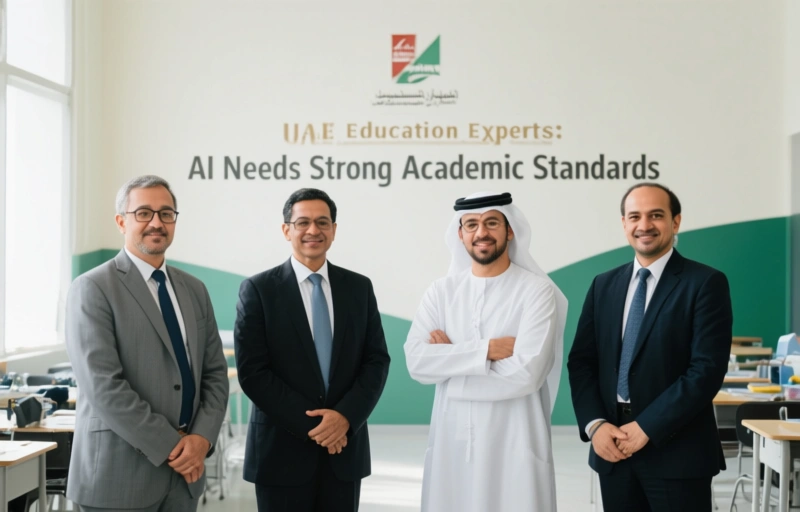
On Emirati Education Day, four NEP experts laid it out clearly. Artificial intelligence isn't just another tool. It represents a pivotal moment for schools and universities everywhere. And here's the kicker—it requires just as much intellectual discipline as it does technical innovation.
We're talking about a fundamental shift. Students can't just learn to use AI; they need to learn to think with it, question its outputs, and understand its limitations. That takes a strong academic foundation. It takes critical thinking skills that go way beyond clicking buttons.
### Building a Framework for Safety
The UAE isn't just talking about this—they're acting on it. They've recently approved a specific list of generative AI platforms for use in schools. This isn't a free-for-all. It's a formal framework designed to keep things safe and structured.
Imagine letting students loose on the internet without any guidance. That's what unregulated AI in classrooms could become. By creating an approved list, educators can focus on teaching *with* the technology, not just policing it.
This approach creates guardrails. It means teachers can introduce these powerful tools while maintaining academic integrity and student safety. They're building the highway before letting everyone drive.
### What This Means for Learning
So what does a classroom with guided AI actually look like? Let's break it down:
- **Critical Thinking First:** Students learn to evaluate AI-generated content, not just accept it. They ask, "Why did the AI say that?" and "What's missing from this picture?"
- **Ethics in the Spotlight:** Conversations about bias, privacy, and creative ownership become part of the daily curriculum. It's not an afterthought.
- **Teachers as Guides:** The educator's role shifts from information-deliverer to learning-facilitator. They help students navigate this new landscape.
- **Skills Over Memorization:** The focus moves toward problem-solving, collaboration, and analysis—skills that AI complements rather than replaces.
One expert put it perfectly: "The danger isn't that AI will replace teachers. The danger is that we'll use AI to replace thinking."
That quote really sticks with me. It captures the whole challenge. We have this incredible technology that can summarize information, generate ideas, and even write essays. But if we're not careful, we might accidentally teach students to outsource their curiosity.
### Looking Ahead
The conversation in the UAE highlights a path forward that many education systems are grappling with. It's not about banning AI or embracing it without question. It's about building strong academic standards that can withstand—and actually benefit from—technological change.
This means updating curricula, yes. But more importantly, it means investing in teacher training. Helping educators feel confident and capable in this new environment. Because at the end of the day, the most important piece of technology in any classroom is still the human being leading it.
The message from Emirati education experts is clear. Let's use this moment not just to adopt new tools, but to reaffirm what education is really about: developing minds that can think, question, and create. With or without AI, that's the goal that matters most.