Energy Industry Races Toward 50% Automation by 2030
Klaus Schmidt ·
Listen to this article~4 min
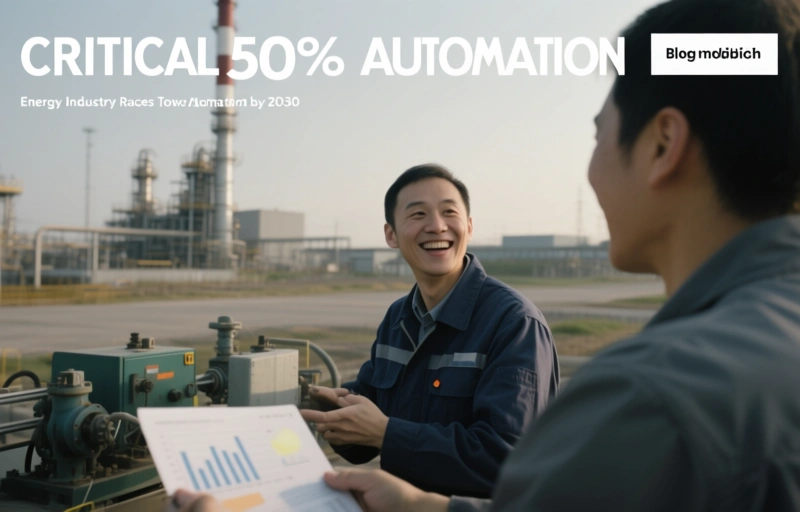
A study of 400 energy leaders reveals a tipping point: nearly 30% of operations are already fully autonomous, racing toward 50% by 2030. Delaying adoption drives up costs amid inflation and workforce challenges.
Let's talk about something that's changing the energy world faster than most of us realize. A major study just dropped, and it's showing a massive shift happening right now. We're talking about 400 senior leaders from the energy and chemicals sectors across a dozen countries all saying the same thing: automation isn't coming anymore—it's already here, and it's accelerating like crazy.
Here's the headline that made me pause: nearly a third of operations are already fully autonomous. That's not some distant future prediction. That's today. And by 2030? They're racing toward almost 50% full automation. That's a complete transformation of how energy gets produced and delivered.
### Why The Sudden Rush?
So what's driving this push? Well, 59% of those leaders gave us a pretty clear warning. They said delaying adoption isn't just about missing out on cool tech—it's going to drive up operating costs significantly. And in an industry already dealing with inflation pressures and a workforce that's retiring faster than we can replace them, that's a serious problem.
Think about it like this: you're trying to run a complex operation with fewer experienced people while everything costs more. Automation starts looking less like an option and more like a survival strategy.
### Who's Leading The Charge?
Here's where things get interesting. The Gulf Cooperation Council (GCC) countries and Asia are currently ahead in adoption levels. They've been investing heavily and seeing the benefits. But North America? They're planning what the study calls "the most aggressive acceleration."
What's fueling that North American push? Two big things:
- The explosion of AI-driven energy demand (all those data centers need power)
- An expanding data center footprint that requires more sophisticated management
It's creating this perfect storm where the need for efficiency meets the technology to achieve it.

### What This Means For The Industry
I was talking to a colleague about this, and they put it perfectly: "We're not just adding automation to existing processes. We're redesigning what's possible." That's the real shift here. It's not about replacing human workers—it's about augmenting what humans can do and creating systems that are more resilient, more efficient, and frankly, safer.
Consider these changes happening right now:
- Remote monitoring of facilities that used to require boots on the ground
- Predictive maintenance that catches problems before they cause downtime
- Optimization algorithms that squeeze more efficiency from every process
- Automated safety systems that respond faster than any human could
### The Human Element
Now, I know what some folks are thinking: "What about the jobs?" That's a fair question. But here's what the data suggests—the transition isn't about eliminating roles as much as transforming them. The skills needed are changing, sure. But the need for human oversight, strategic thinking, and complex problem-solving? That's not going away. If anything, it becomes more valuable.
What we're really seeing is a shift from manual operation to strategic management. From reacting to problems to preventing them. And that requires a different kind of expertise—one that understands both the technology and the underlying processes.
### Looking Toward 2030
So where does this leave us? We're at what the study calls a "tipping point." The technology has proven itself, the economic case is clear, and the pressure to adopt is building from multiple directions. Companies that move now will be positioning themselves for the next decade of energy production. Those that wait? They'll be playing catch-up in a game that's already moved to a different field.
The bottom line is this: the race toward automation in energy isn't just about keeping up with competitors. It's about building systems that can handle the demands of a world that's increasingly digital, increasingly connected, and increasingly hungry for reliable, affordable power. And that's a race worth running.