Dubai's du & JOOD Unite for $817K Giving Boost
Klaus Schmidt ·
Listen to this article~4 min
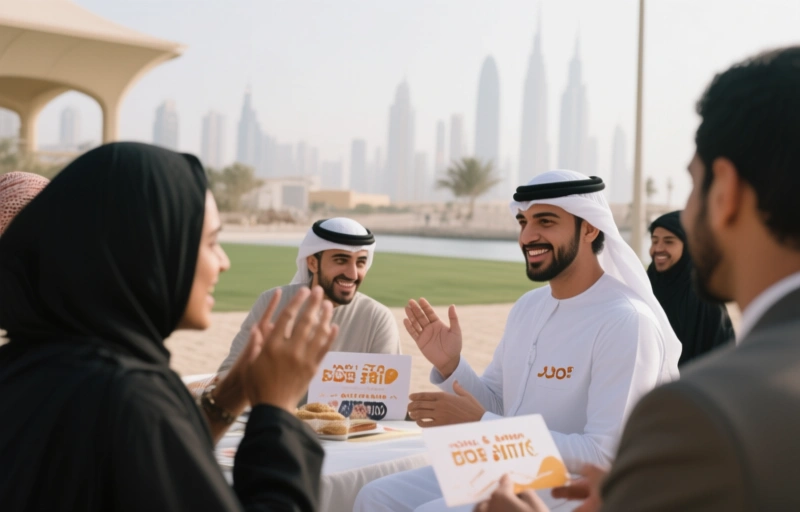
Dubai's du and JOOD have signed an MOU for AED 3 million ($817,000) to boost sustainable giving and community contributions, with a focus on cross-sector integration.
### A Major Step for Sustainable Giving in Dubai
You know those moments when big organizations actually do something that matters? Well, Dubai just had one of those. du, the telecom and digital services giant, teamed up with JOOD, the Dubai Community Contributions Establishment, to sign a memorandum of understanding (MOU) worth AED 3 million, which is about $817,000 in U.S. dollars. That's a serious chunk of change, and it's all going toward making community giving more organized and impactful.
This isn't just a press release—it's a real shift in how the private sector and government work together. The goal? To create a system where contributions from companies and individuals actually reach the people who need them most. No more guesswork, no more wasted resources. Just clean, efficient giving.
### Who's Behind This?
The signing ceremony was a big deal. It happened in the presence of Her Excellency Hessa bint Essa Buhumaid, the Director General of the Community Development Authority. She's someone who truly gets how important structured giving is. The MOU itself was signed by H.E. Marwan Rashid bin Hashim, CEO of JOOD, and Fahad Al Hassawi, du's Chief Executive Officer. These are the people who can make things happen.
Here's the thing: when you have a telecom provider like du, which touches nearly every household in Dubai, partnering with an organization like JOOD that focuses on community contributions, you get a powerhouse. They're not just writing checks. They're building a framework for long-term, sustainable impact. That's what sets this apart from a typical corporate donation.
### What Does the Money Actually Do?
Let's break it down. The $817,000 isn't just sitting in a bank account. It's going to fund programs that organize community contributions, making sure every dollar goes further. Think of it like this: instead of a bunch of small, scattered efforts, you get one coordinated push. That means less overhead, more transparency, and better results.
- **Organized giving:** The money helps create systems where donations are tracked and managed efficiently.
- **Cross-sector partnerships:** It brings together private companies, government agencies, and non-profits to work as one team.
- **Sustainable impact:** The goal isn't a one-time fix. It's about building something that lasts for years.
This is the kind of stuff that actually changes communities. When you align incentives and resources, magic happens. And that's exactly what du and JOOD are aiming for.
### Why This Matters for the U.S. Audience
Now, you might be thinking, "I'm in the U.S. What does this have to do with me?" Well, a lot actually. The model they're using in Dubai is something American companies and charities can learn from. It's all about integration. Instead of everyone doing their own thing, you get a unified strategy. That's a lesson that translates anywhere.
Plus, the scale here is impressive. $817,000 might not seem like a fortune compared to some U.S. corporate donations, but in a market like Dubai, it's a significant investment. And it's not just about the money—it's about the partnership. du brings its network and expertise, while JOOD brings its community focus. Together, they're stronger.
### What's Next?
So, what happens now? The MOU is just the beginning. Over the coming months, du and JOOD will roll out specific programs and initiatives. They'll work with other private sector players to expand the reach. And they'll keep pushing for that cross-sector integration that makes everything work.
If you're in the U.S. and looking for inspiration on how to structure your own corporate giving, this is a case study worth watching. It's not about writing a check and walking away. It's about building systems that actually deliver results. And that's something we can all get behind.
In the end, this is a story about hope. Hope that when people and organizations come together, they can make a real difference. And hope that sustainable giving isn't just a buzzword—it's a reality.