Dubai's Smart Rental Index: A Guide for US Real Estate Pros
Klaus Schmidt ·
Listen to this article~4 min
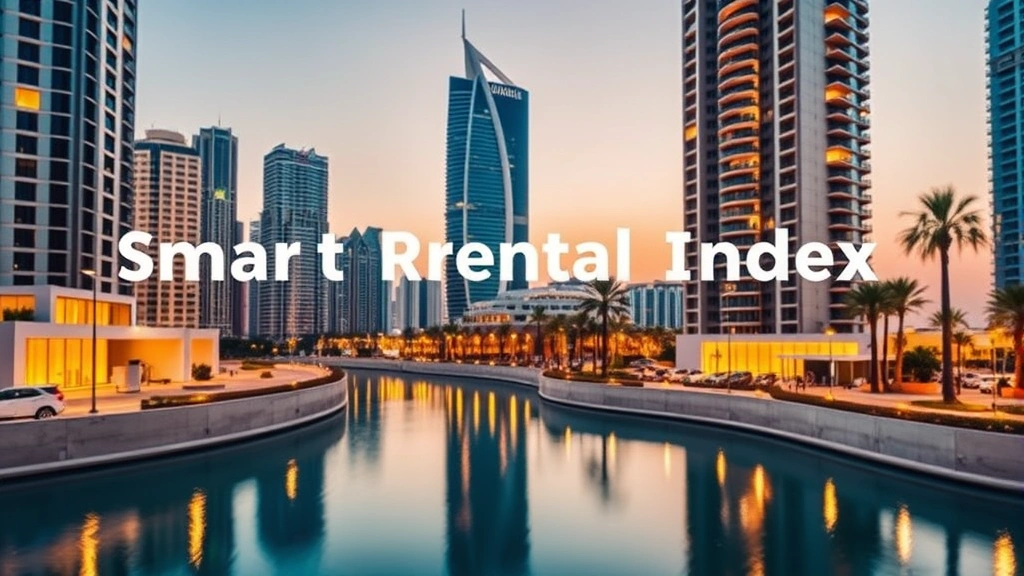
Explore Dubai's innovative Rental Index and Smart Rental Index. This guide breaks down how these tools bring transparency and data-driven insights to the market, offering valuable lessons for US real estate professionals analyzing global opportunities.
If you're a real estate professional in the United States looking at international markets, you've probably heard the buzz about Dubai. It's not just about luxury towers and artificial islands anymore. The city has built something truly innovative for its rental market: the Dubai Rental Index and its smarter cousin, the Dubai Smart Rental Index.
Let's break down what these are and why they matter, even from thousands of miles away.
### What is the Dubai Rental Index?
Think of it as the official guidebook. The Dubai Rental Index, managed by the Dubai Land Department, is the government's benchmark for rental prices. It's not just a suggestion—it's the primary reference used to determine fair increases and settle disputes between landlords and tenants. The index categorizes properties by type, location, and size, giving a clear picture of the average going rate.
It brings a level of transparency that many markets lack. For a US analyst, it's fascinating data. You can see how a three-bedroom apartment in Dubai Marina compares to one in Downtown Dubai, all in a standardized format.
### The Evolution to a Smart Rental Index
Here's where it gets really interesting. Dubai didn't stop with a static index. They developed the Dubai Smart Rental Index. This is a dynamic, data-driven system. It doesn't just look at averages; it incorporates real-time market data, transaction volumes, and economic indicators.
- It uses AI and big data analytics to predict trends.
- It provides more granular, neighborhood-level insights.
- It aims to reflect the true, current pulse of the market, not just historical averages.
This shift from a standard index to a 'smart' one is a huge leap. It's about moving from reactive data to predictive intelligence. For professionals used to tools like Zillow's Zestimate or CoStar data, the concept is familiar, but seeing a government implement it at a city-wide scale is impressive.
### Why Should US Professionals Care?
You might be wondering why a market 8,000 miles away is relevant. First, it's a masterclass in market regulation and technological integration. The UAE dirham (AED) is pegged to the US dollar, so currency fluctuation isn't a major concern. Rents are often quoted annually, but breaking it down, prime areas can see annual rents for a two-bedroom apartment ranging from $30,000 to over $80,000 USD, depending on the view and amenities.
Second, for clients or firms looking at global portfolio diversification, understanding this indexed system is crucial. It reduces speculation and provides a clear framework for investment. The transparency lowers the risk for foreign investors, which is always a top concern.
### Key Metrics and How to Read Them
When analyzing the index, don't just look at the price per square foot. Context is everything. Consider these factors, which the smart index likely weighs:
- **Community Amenities:** Is it near a metro station? What about schools and parks?
- **Building Age and Quality:** A newer tower with a gym and pool commands a premium.
- **Supply Pipeline:** New developments in the area can suppress rental growth.
As one industry expert noted, "The smart index represents a fusion of regulatory oversight and cutting-edge tech—it's setting a new global standard."
### The Bottom Line for Your Analysis
Dubai's rental landscape, guided by these indices, offers a case study in creating a stable, data-transparent real estate environment. The Smart Rental Index, in particular, shows how governments can use technology not to control a market, but to illuminate it. For the US professional, it's a benchmark of innovation. It asks the question: how can data and regulation work together to create a fairer, more efficient market?
It's worth keeping an eye on. The lessons learned here in data integration and market transparency could very well influence tools and regulations closer to home. In a globalized world, smart ideas have a way of traveling.