Dubai's RTA Builds 3 Major Truck Rest Stops with Private…
Klaus Schmidt ·
Listen to this article~4 min
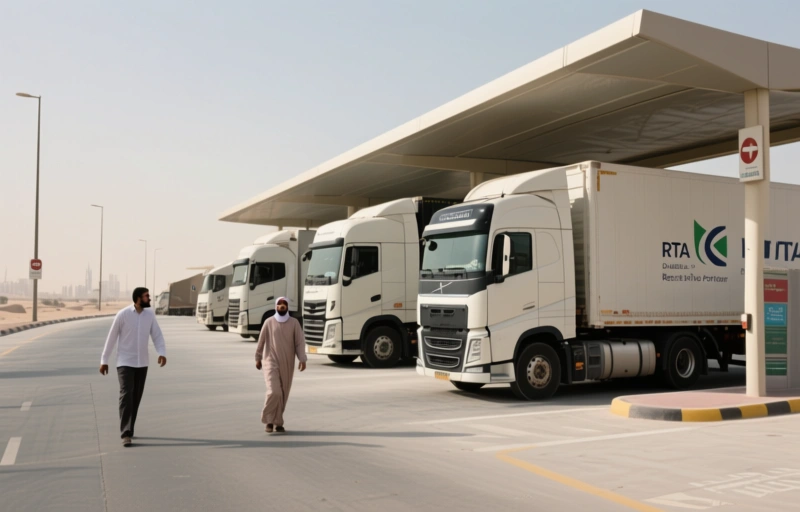
Dubai's RTA partners with private sector to build three massive truck rest areas spanning 2.26M sq ft with capacity for 490 trucks. Strategic locations along major freight corridors aim to improve driver safety and support the growing logistics sector.
Hey there, let's talk about something that doesn't get enough attention but affects all of us who rely on goods getting where they need to go. Dubai's Roads and Transport Authority just made a big move that's going to change things for truck drivers and the entire logistics chain.
They've awarded a contract to develop three massive integrated truck rest areas. And here's the kicker—they're doing it in partnership with the private sector. That's smart business, if you ask me. When public and private interests align on infrastructure, everyone wins.
### Why These Rest Areas Matter So Much
Think about it for a second. We're talking about facilities that span over 2.26 million square feet. That's huge. They'll have capacity for 490 trucks at once. But it's not just about parking spaces.
These are going to be proper rest areas with integrated services focused on driver safety and well-being. We're talking places where drivers can actually rest, eat decent food, maybe get some basic maintenance done. The kind of stuff that makes a tough job just a little bit easier.
Mattar Al Tayer, who's leading this initiative, put it perfectly:
> "These rest areas offer integrated services focused on the safety and well-being of truck drivers. The freight and logistics sector is a key driver of sustainable economic growth and a pillar of our D33 objectives."
### Strategic Locations Mean Smart Planning
Now, where are they putting these? The locations tell you everything about the strategic thinking here:
- Along Sheikh Mohammed bin Zayed Road
- On Emirates Road
- In the Jebel Ali Industrial Area
These aren't random spots. They're along major freight corridors where drivers need these services most. It's like putting water stations along a marathon route—you put them where people actually need them.
### The Scale of Dubai's Trucking Industry
Let me give you some numbers that'll make your head spin. There are 500,000 truck trips recorded daily on Dubai's roads. Daily. And there are 85,000 trucks registered in Dubai alone.
That's not just traffic—that's the lifeblood of commerce. Every product on every shelf, every component in every factory, most of it travels by truck at some point. Keeping those trucks moving safely and efficiently isn't just nice to have—it's essential for the economy.
### What This Means for Business Professionals
If you're in logistics, supply chain, or any business that moves goods, this is significant. Better rest areas mean:
- Reduced driver fatigue (which means safer roads for everyone)
- More efficient trip planning
- Potentially lower operating costs
- Better driver retention (happy drivers stick around)
And here's the thing about the private sector partnership. It means these facilities are likely to be well-maintained and actually useful. Private operators have incentive to make them places drivers want to use.
### Looking at the Bigger Picture
This isn't happening in a vacuum. Dubai's got these D33 economic objectives, and logistics is right at the center of them. The city wants to double its economy and become one of the top three global cities. You don't do that without a world-class logistics network.
These rest areas are one piece of that puzzle. They're about recognizing that infrastructure isn't just roads and bridges—it's the support systems that keep everything moving.
What I find most interesting is the timing. April 2026 might seem far off, but in infrastructure terms, that's right around the corner. Planning and building something this scale takes vision, and it looks like Dubai's RTA has it.
So next time you see a truck on the highway, maybe think about the person behind the wheel. And about how smart investments in basic infrastructure—like decent places to rest—make all our lives a little better, even if we never pull into one of those parking spots ourselves.