Dubai Real Estate 2026: Why Geopolitical Shocks Don't Last
Klaus Schmidt ·
Listen to this article~4 min
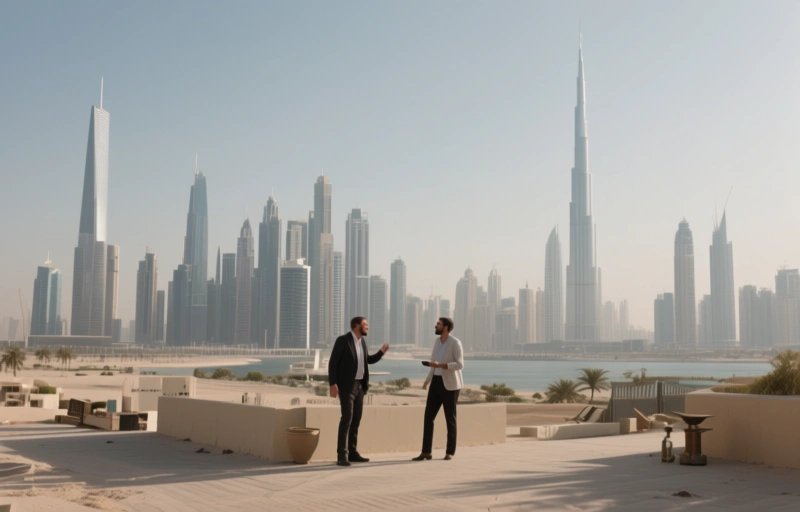
Despite a major geopolitical event in early 2026, Dubai's real estate market remains resilient. Hard data shows record sales and strong fundamentals, proving why investors see it as a safe, long-term harbor.
Let's talk about something that's been on every investor's mind lately. On February 28, 2026, the Middle East saw a major military escalation. A joint US-Israel strike on Iranian targets was followed by Iran's retaliatory missile and drone attacks across the Gulf, including the UAE. News feeds lit up. Markets flickered. And that same old question popped up again: Is Dubai still safe for real estate investment?
For global investors eyeing Dubai property, geopolitical events always spark that worry about stability. I get it. You're putting serious money on the line. But here's the thing—the answer, backed by hard data, is a resounding yes. The impact on Dubai's property market is going to be negligible, and I'll walk you through exactly why.
### What Actually Happened in the UAE
Iran launched missiles and drones targeting several Gulf states. The UAE's air defense systems? They worked. They successfully intercepted and destroyed the incoming threats. Life in Dubai didn't skip a beat. Commercial spots, transport, public services—all running normally.
Emaar Properties, Dubai's biggest developer, put out a statement saying everything was business as usual. Their founder, Mohamed Alabbar, called it a reflection of Dubai's economic vision and the long-term confidence investors have here. That's not just PR talk.

### The Numbers Don't Lie
Before we even look at the attack's impact, let's check the foundation. This market keeps attracting international buyers—for investment, residency, and capital preservation. The luxury segment, especially, is pulling in global wealth from Europe, India, Russia, and the Gulf.
Here's a snapshot of the market's health right before the event:
- **2025 Total Property Sales:** $187 Billion (a record, with over 215,000 transactions)
- **Jan 2026 Transactions (Year-over-Year):** +43.9%
- **Emaar Sales (Jan–Feb 2026):** Up 118% vs. the same period in 2025
- **Cash Deals (Jan 2026):** Roughly 60% of transactions
- **Rental Yields (Apartments):** 8–9.5%
- **Ultra-Luxury Sales (Jan 2026):** 990 homes sold above $2.72 million (AED 10M)
These figures are from publicly available reports as of March 2026. They paint a picture of incredible momentum and liquidity.
### Why Dubai Real Estate Stands Firm
I see five core reasons why this market isn't just weathering the storm—it's barely feeling a breeze.
**1. Dubai's Defenses Worked, and Everyone Saw It**
The UAE military didn't get lucky. They demonstrated one of the world's most advanced defense systems. For investors watching from London, Mumbai, or New York, the takeaway was crystal clear. Dubai's infrastructure held under real pressure. That's a confidence signal few global cities can offer.
**2. It's a 72-Hour Pause, Not a Collapse**
Top real estate consultants in Dubai have a rule of thumb. Geopolitical events usually trigger a 48 to 72-hour pause. Buyers just need a minute to assess the headlines. It's not fear—it's prudence.
Look at history. Previous tensions, like the 2019 Aramco attacks or the 2020 US-Iran escalation, saw Dubai's market rebound within weeks. Sometimes it even accelerated as regional capital sought safety right here.
**3. Crisis Often Sends Money *To* Dubai**
This might sound counterintuitive, but instability in the wider Middle East often strengthens Dubai's position. High-net-worth individuals from Iran, Lebanon, Bahrain, Kuwait, and beyond have a pattern. When uncertainty hits home, they move capital into Dubai real estate. It's seen as a safe harbor.
Think of it like this. When there's a storm elsewhere, people look for the sturdiest port. Dubai has built its reputation as that port. The events of late February 2026 didn't change that fundamental dynamic. If anything, they reinforced it by proving the city's defenses and operational resilience in a very public way.
The market's underlying strength—record sales, high cash liquidity, and competitive yields—creates a buffer that short-term shocks can't penetrate. Investors aren't just buying property; they're buying into a system that's designed to withstand pressure. That's the real story behind the headlines.