Dubai Opens Major Bridge Cutting Travel Time by 83%
Klaus Schmidt ·
Listen to this article~5 min
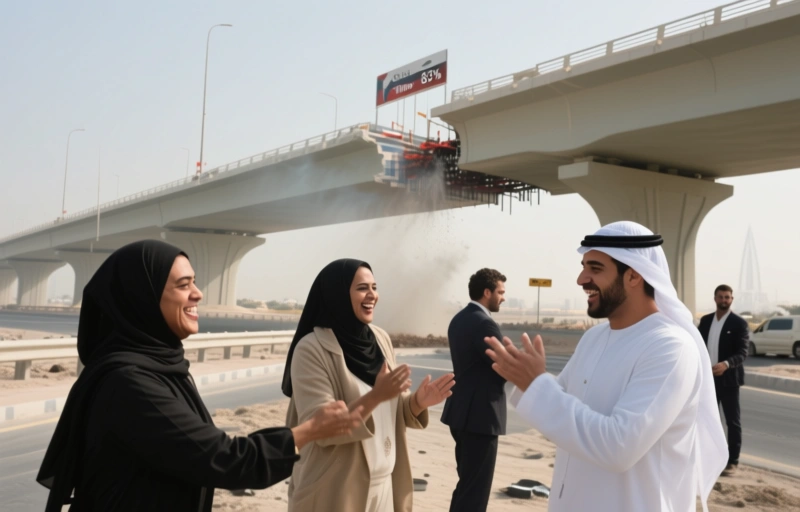
Dubai's new 3,280-foot bridge slashes travel time from 6 minutes to just 1 minute, part of a major infrastructure project transforming the World Trade Centre area and reducing intersection delays by 88%.
You know that feeling when you're stuck in traffic, watching the minutes tick by? Well, Dubai's Roads and Transport Authority just gave commuters a massive gift. They've opened a new bridge that's changing how people move through the city's busiest areas.
It's part of what they're calling the World Trade Centre Roundabout Development Project. Honestly, that's a mouthful, but the results speak for themselves. This isn't just about adding another bridge—it's about rethinking how traffic flows in one of the world's most dynamic cities.
### What This New Bridge Actually Does
Let's talk numbers for a second, because they're pretty impressive. The newly completed bridge reduces what used to be a six-minute journey down to just one minute. That's an 83% reduction in travel time. Think about what you could do with those extra five minutes every trip.
But here's what really gets me—the intersection delay at that roundabout used to be twelve minutes during peak times. Now? Ninety seconds. That's the kind of improvement that changes your daily commute from frustrating to manageable.
### The Scale of This Infrastructure Project
This isn't some small tweak to the road network. The project includes about 16,400 feet of bridges (that's 5,000 meters converted for us in the States). They're also converting that famous roundabout into what traffic engineers call a "signalised at-grade intersection."
Basically, they're replacing the circular flow with traffic lights that control the movement more precisely. It might sound less glamorous than a roundabout, but when you're dealing with thousands of vehicles every hour, precision matters.
The specific bridge they just opened stretches about 3,280 feet (1,000 meters) and has two lanes. It's designed to handle up to 3,000 vehicles per hour, which is no small capacity. This is infrastructure built for today's needs with tomorrow's growth in mind.
### Why This Matters Beyond Dubai
You might be wondering why a business professional in the United States should care about a bridge in Dubai. Here's the thing—Dubai has become a global case study in urban planning and infrastructure development. What they're doing today, other major cities will be studying tomorrow.
Their approach to solving traffic congestion through strategic infrastructure investments offers lessons for any city dealing with growth pressures. They're not just adding lanes; they're rethinking entire traffic patterns.
As Mattar Al Tayer, Director General and Chairman of the Board of Executive Directors of RTA, put it:
> "This project represents our commitment to enhancing mobility and reducing congestion through intelligent infrastructure solutions that serve both current and future needs."
That philosophy—building for today while planning for tomorrow—is something every city could learn from.
### The Human Impact of Better Infrastructure
Let's step back from the engineering specs for a moment. What does this actually mean for people living and working in Dubai?
- Less time stuck in traffic means more time with family
- Reduced fuel consumption and vehicle emissions
- Lower stress levels during daily commutes
- Improved reliability for business deliveries and services
- Enhanced accessibility to key commercial areas
These aren't abstract benefits. They're quality-of-life improvements that ripple through the entire economy. When people spend less time commuting, they have more energy for work, family, and community.
### Looking at the Bigger Picture
This bridge opening on February 27, 2026, isn't happening in isolation. It's part of Dubai's broader vision to become one of the world's most connected and accessible cities. They're thinking decades ahead, not just about next year's traffic patterns.
What's fascinating is how they're balancing immediate congestion relief with long-term urban planning. The conversion of the roundabout to a signalized intersection might seem like a step backward to some, but when you're dealing with the volume of traffic Dubai experiences, sometimes controlled flow beats free flow.
The project demonstrates something important: infrastructure isn't just about concrete and steel. It's about understanding human behavior, anticipating growth patterns, and creating systems that serve people rather than forcing people to adapt to systems.
As cities around the world grapple with similar challenges—population growth, increasing vehicle numbers, environmental concerns—Dubai's approach offers valuable insights. They're showing that with thoughtful planning and strategic investment, even the most congested urban areas can become more efficient and livable.
So next time you're sitting in traffic, maybe think about how a different approach to infrastructure could change that experience. Because somewhere in Dubai right now, someone just saved five minutes on their commute thanks to some forward-thinking urban planning.