Dubai Judicial Institute Graduates First International Humanitarian Law Cohort
Klaus Schmidt ·
Listen to this article~4 min

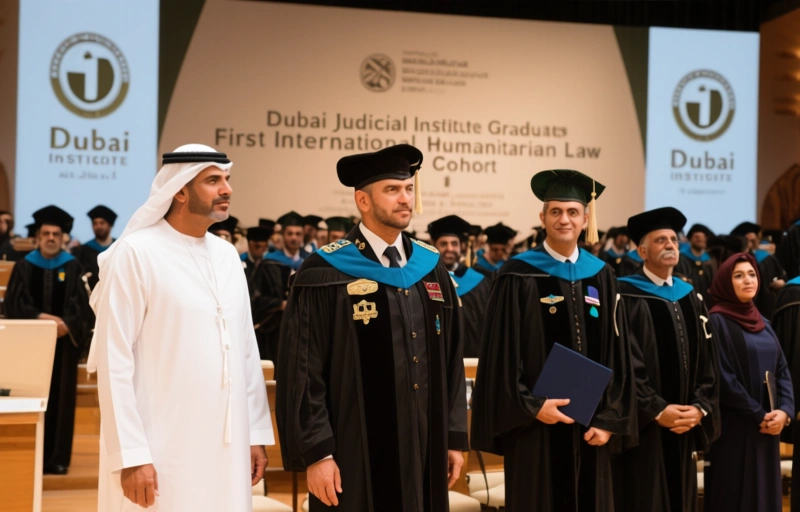
The Dubai Judicial Institute celebrated the graduation of the first cohort from its accredited International Humanitarian Law program for Ministry of Defence personnel, marking a significant step in specialized legal training.
So here's something that caught my eye recently. The Dubai Judicial Institute just celebrated a pretty significant milestone. They held a graduation ceremony for the very first group to complete their 'International Humanitarian Law' program. And this wasn't just any program—it was specifically designed for personnel from the UAE's Ministry of Defence.
Think about that for a second. We're talking about the first formally accredited initiative of its kind in the entire country. That's not just a box-ticking exercise. It shows a real, deep commitment to building specialized legal expertise from the ground up.
### Why This Program Matters
You might be wondering, why focus on humanitarian law for defence personnel? Well, it's actually pretty straightforward when you think about it. These are the people making critical decisions in complex situations. Having a solid understanding of international humanitarian principles isn't just nice to have—it's essential.
The program aims to strengthen awareness of these principles in line with the highest international standards. That means when personnel complete this training, they're not just checking a requirement. They're gaining practical knowledge they can actually use in the field.
### A Ceremony with Significance
The graduation ceremony itself was quite the event. It was graced by some esteemed dignitaries, including His Excellency Major General Obaid Saif Al Ketbi, who serves as the Chief of Military Justice at the Ministry of Defence. His presence alone speaks volumes about how seriously this initiative is being taken at the highest levels.
When you see that level of engagement from senior leadership, it tells you this isn't just another training program. It's a strategic investment in professional development that aligns with broader national priorities.
### What Makes This Different
Let's break down what sets this apart from other training initiatives:
- It's formally accredited, which means it meets specific quality standards
- It's tailored specifically for defence personnel's unique needs
- It focuses on practical application of humanitarian principles
- It represents a partnership between judicial and defence institutions
That last point is particularly interesting. When judicial institutes and defence ministries collaborate like this, you get programs that are both theoretically sound and practically relevant. It's not academic theory floating in space—it's grounded in real-world needs.
### The Bigger Picture
Here's what I find most compelling about this development. The Dubai Judicial Institute isn't just running courses. They're actively shaping the professional landscape. By creating this program, they're filling a gap that probably existed for quite some time.
They're saying, "We recognize this knowledge is crucial, so let's make sure our defence personnel have access to the best possible training." That's forward-thinking in a way that benefits everyone involved—and frankly, it reflects well on the UAE's commitment to international standards.
As one participant noted during the ceremony, "This training bridges the gap between military operations and legal frameworks in ways we hadn't fully appreciated before."
### Looking Ahead
So what happens now? Well, graduating this first cohort is just the beginning. The real test will be how this knowledge gets applied in practice. But having a formally accredited program means there's now a structured pathway for more defence personnel to gain this expertise.
It also sets a precedent. Other institutions might look at this model and think, "Hey, we should develop something similar for our context." That's how professional standards get raised across the board—one innovative program at a time.
The bottom line is this: when judicial institutes take the initiative to develop specialized programs for defence personnel, everyone benefits. It strengthens institutional capabilities, enhances professional standards, and ultimately contributes to more informed decision-making where it matters most.