Dubai's Jabr System: Digital Bereavement Support Gains Global Attention
Klaus Schmidt ·
Listen to this article~5 min
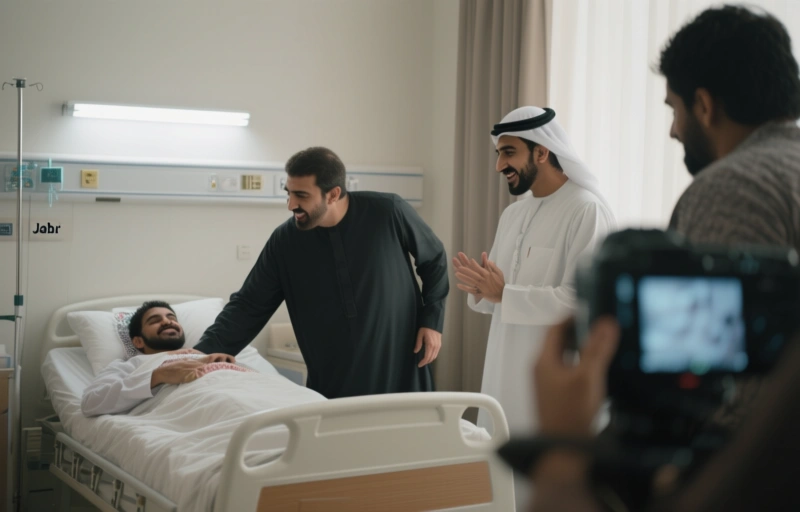
Dubai's innovative Jabr system, showcased at World Health Expo 2026, is transforming bereavement support through integrated digital and human-centered care, attracting global attention from health and government professionals.
You know how overwhelming it can be when you're dealing with loss? The paperwork, the notifications, the endless administrative tasks—it's the last thing anyone wants to think about. Well, Dubai's been quietly working on something pretty remarkable to change that experience entirely.
At the World Health Expo 2026, the Dubai Health Authority is showcasing what they call the "Jabr" system. It's not just another government program. It's a complete rethinking of how we support grieving families, and honestly, the international response has been something to see.
### What Makes Jabr Different?
Here's the thing about traditional systems—they're fragmented. You might need to visit five different offices, fill out the same information ten times, and wait weeks for anything to happen. Jabr flips that script entirely.
It creates one single point of contact for everything a family needs after losing someone. We're talking about combining that essential human touch with smart digital infrastructure that actually works for people, not against them.
Since the expo opened, I've noticed something interesting. Health officials from Europe, government representatives from Asia, private-sector leaders from North America—they're all taking notes. They're not just looking at the technology; they're looking at how Dubai managed to get different government departments to actually work together on this.
### The Human Element in Digital Systems
Let me pause here for a second. When we talk about "digital transformation," it often feels cold, right? All algorithms and efficiency metrics. But what struck me about Jabr is how they've kept the human experience at the center.
One official described it like this: "We're not building a system to process death certificates. We're building a system to support living people during their hardest moments."
That shift in perspective changes everything. It means the technology serves the emotional needs first, not the bureaucratic ones.
### Why the Global Interest is Growing
So why are so many international professionals paying attention? Well, consider these points:
- It demonstrates real cross-government coordination (which we all know is notoriously difficult)
- It simplifies processes that are traditionally complex and emotionally draining
- It shows how digital tools can actually enhance human connection rather than replace it
- It creates a model that could be adapted for other sensitive government services
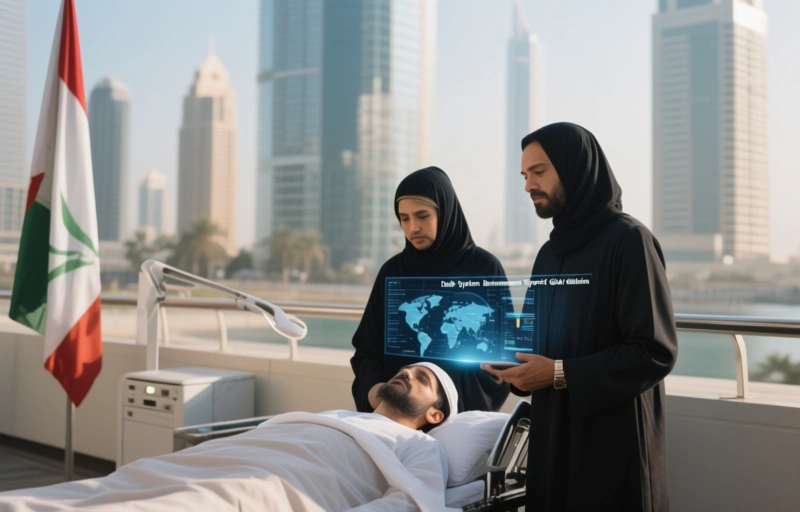
What's really catching people's attention is how Dubai managed to break down those silos between departments. Health, civil affairs, social services—they're all speaking the same language through this system.
### The Conversation Around the Expo
Walking through the exhibition space, you can hear the conversations. Specialists are asking practical questions: How do you handle data privacy during such vulnerable moments? What training do support staff receive? How do you maintain that human touch when so much is automated?
These aren't theoretical discussions. They're the real challenges every community faces when trying to improve end-of-life services. And Dubai seems to have developed some genuine solutions worth examining.
### Looking Beyond the Technology
Here's what I think we sometimes miss when we get excited about new systems—the cultural shift required to make them work. Jabr isn't just about better software. It's about changing how government employees view their role in citizens' lives.
It requires empathy training alongside technical training. It needs leadership that prioritizes compassionate service as much as efficient service. And honestly, that might be the hardest part to replicate elsewhere.
### What This Means for Future Services
I keep coming back to one thought: if we can create systems this thoughtful for bereavement support, what other areas of government service could benefit from similar rethinking? Healthcare transitions? Disability services? Elder care?
The principles behind Jabr—single point of contact, human-centered design, cross-department coordination—they're not unique to bereavement. They're a blueprint for making any complex government interaction more humane.
### The Takeaway for Professionals
For those of us working in public service or digital transformation, there's a lot to consider here. The technology matters, sure. But what matters more is asking the right questions before we build anything:
- Who are we really serving?
- What's their emotional state during this interaction?
- How can we remove barriers rather than create new ones?
- Where can we consolidate touchpoints to reduce stress?
Dubai's Jabr system might have started as a bereavement support tool, but the conversations it's sparking at the World Health Expo are about something much bigger. They're about reimagining how governments connect with people during life's most challenging moments—and doing it with both technological sophistication and genuine human care.
Sometimes the most advanced systems aren't the ones with the most features. They're the ones that understand what people actually need when they're at their most vulnerable. And from what I'm seeing, that understanding is what's drawing global attention to a quiet corner of the World Health Expo.