Dubai's EV Charging Expansion: 600 Public Stations
Klaus Schmidt ·
Listen to this article~4 min
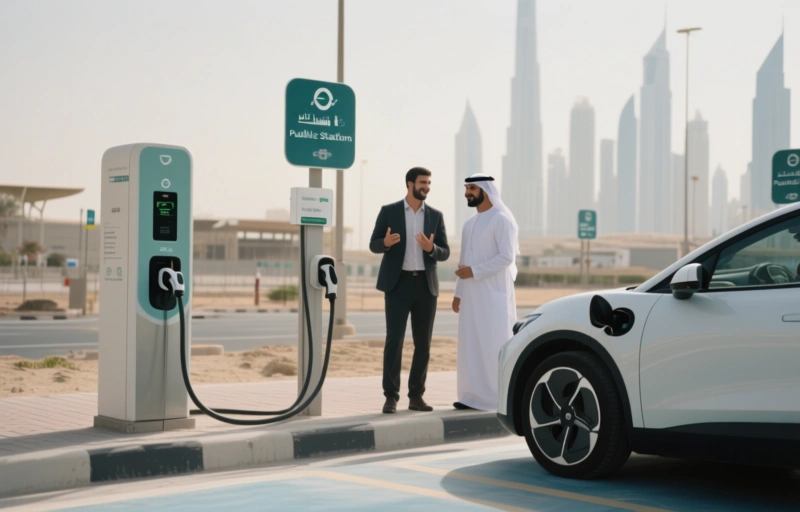
Dubai invests $40.8 million to install 600 EV supercharging stations in public parks and beaches by 2026, supporting sustainable mobility goals through public-private partnerships that create future-ready public spaces.
Let's talk about what's happening in Dubai right now. It's pretty exciting if you're following sustainable urban development. The city just announced a major push to install electric vehicle supercharging stations across 600 public parking spaces. We're talking parks, beaches, recreational facilities—all the places people actually spend their weekends.
This isn't just about adding a few plugs here and there. It's a serious commitment to changing how people move through the city. Think about it—you're at the beach with your family, your EV needs a boost, and instead of worrying about range anxiety, you can charge up while the kids build sandcastles. That's the future they're building.
### The Big Picture Behind the Chargers
What really caught my attention was how this fits into Dubai's broader vision. The initiative directly supports something called the Greenery and Parks Strategy 2040. That's not just a fancy name—it's a roadmap for creating greener, more livable public spaces over the next two decades.
They're not stopping there either. This move advances Dubai's sustainable mobility goals in a tangible way. It's one thing to talk about electric vehicles in boardrooms, but actually installing infrastructure where people need it? That's where the rubber meets the road, literally.
### How They're Making It Happen
Here's where it gets interesting financially. The planned investment is about $40.8 million (that's AED 150 million converted). But here's the kicker—they're doing this through a Public-Private Partnership model. That means the government isn't footing the entire bill alone.
- Private companies bring expertise and efficiency
- Public sector ensures alignment with community needs
- Shared risk makes ambitious projects more feasible
- Faster implementation than traditional government projects
This approach is smart because it aligns perfectly with something called the Dubai Economic Agenda D33. Without getting too technical, that's their plan to double the economy's size over the next decade. Infrastructure like this attracts businesses and talent who care about sustainability.
### Why This Matters Beyond Dubai
You might be wondering why a business analyst in the United States cares about parking spaces in Dubai. Well, it's simple—cities everywhere are watching. When a global hub like Dubai makes moves this significant, it sets a precedent.
As one urban planner I spoke with recently put it: "Infrastructure decisions today shape mobility patterns for generations. Charging stations in public spaces normalize EV adoption faster than any marketing campaign ever could."
That really stuck with me. It's not just about the hardware—it's about changing behavior, making sustainable choices the easy choices.
### The Human Element of Public Spaces
What I appreciate most is how this reinforces Dubai Municipality's commitment to what they call "future-ready public spaces." That's a fancy way of saying they're building places that work for people today and tomorrow.
Sustainability and modern mobility aren't separate conversations anymore. They're woven together. A park isn't just green space—it's part of the transportation network. A beach isn't just for swimming—it's a charging hub for your commute home.
This creates a ripple effect too. More charging stations mean more people consider EVs. More EVs mean cleaner air in those same parks and beaches. It's a virtuous cycle that starts with something as simple as a parking space with a plug.
### Looking Down the Road
Here's what I'm watching for next. With 600 stations coming online, the real test will be how people use them. Will they become part of daily routines? Will they enable new patterns of living and working?
I'm particularly curious about the recreational facilities. Imagine finishing a hike or a soccer game and your car is fully charged and ready to go. That convenience factor changes everything.
The timeline shows they're serious too—this is planned for completion by April 2026. That's not some distant future date. It's right around the corner in planning terms.
What Dubai's showing us is that sustainable cities don't happen by accident. They're built through deliberate choices, smart partnerships, and infrastructure that serves real human needs. And sometimes, that infrastructure looks a lot like a parking space with a very special outlet.