Dubai Deira Stormwater System: 36% Complete
Klaus Schmidt ·
Listen to this article~4 min
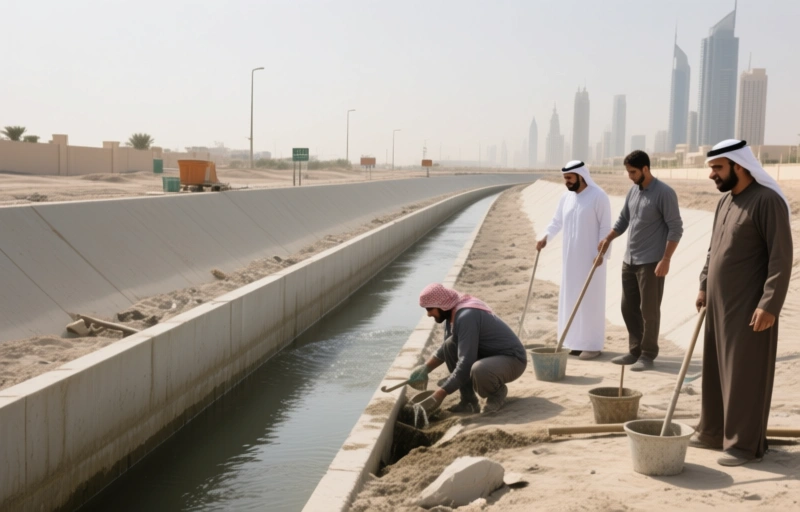
Dubai's Tasreef Programme hits 36% completion on Deira stormwater drainage. A $136M project boosting capacity 700% to handle population growth and build a resilient future city.
Dubai is making serious progress on its stormwater drainage system, and it's a bigger deal than you might think. The Tasreef Programme, a massive infrastructure initiative, just hit a major milestone: 36% completion on the Deira phase. This isn't just about preventing puddles; it's about future-proofing an entire city.
Marwan Ahmed bin Ghalita, a key figure at Dubai Municipality, put it this way: "Dubai Municipality continues to implement the 'Tasreef' Programme projects to enhance the efficiency, sustainability, and resilience of infrastructure, reinforcing Dubai's approach to building a model of future-ready, resilient cities." He's not wrong. This project is a core piece of the puzzle for a city that's growing fast.
### Why This Matters for Dubai's Future
This project isn't happening in a vacuum. It's directly tied to the Dubai Urban Plan 2040, which expects the population to jump from 3.3 million to 5.8 million by 2040. That's a lot more people, cars, and buildings. A storm that's manageable today could be a nightmare tomorrow if the infrastructure doesn't keep pace.
- The system currently covers 13 vital areas spanning about 11,614 acres (that's 4,700 hectares for our metric friends).
- The goal is to increase stormwater drainage capacity by a staggering 700%.
- A new pumping station is being built near Dubai Creek to handle the extra flow.
The whole thing is scheduled for completion soon, and it's a smart move. Think of it like this: you wouldn't build a bigger house without upgrading the plumbing. Dubai is doing exactly that on a city-wide scale.
### The Numbers Behind the Project
Let's talk dollars and cents. The total cost for this phase is AED 500 million. Converted to US dollars, that's roughly $136 million. That's a serious investment, but it's one that pays off in resilience. The system uses a network of tunnels and pipelines to channel stormwater away from streets and neighborhoods. It's like giving the city a much bigger set of lungs to breathe during a heavy rain.
This kind of work is often invisible, happening underground, but its impact is huge. Without it, flooding can disrupt businesses, damage homes, and even shut down roads. For a global hub like Dubai, that's simply not an option.
### What It Means for Residents and Businesses
For anyone living or working in Dubai, this project means fewer disruptions and more confidence. Imagine a heavy downpour that used to cause traffic jams and flooded parking lots. After this upgrade, that same rain will be handled with ease. It's a behind-the-scenes upgrade that makes daily life smoother.
The project also aligns with Dubai's goal to be a "future-ready" city. That's not just a buzzword; it's about building systems that can handle tomorrow's challenges today. Whether you're a business owner worried about supply chain disruptions or a resident just trying to get home, this matters.
### A Model for Resilient Cities
Dubai isn't just building for itself. The Tasreef Programme is being watched by city planners around the world. If successful, it could become a blueprint for other fast-growing urban centers. The combination of advanced engineering, strategic planning, and significant investment is a recipe for success.
In short, this 36% completion is a big deal. It shows that Dubai is serious about its 2040 vision, and it's putting money and muscle behind it. The next time you see a construction site in Deira, remember: it's not just another building. It's part of a system that keeps the city running, rain or shine.