Air Cargo Demand Surges 11.2% in February 2026
Klaus Schmidt ·
Listen to this article~4 min

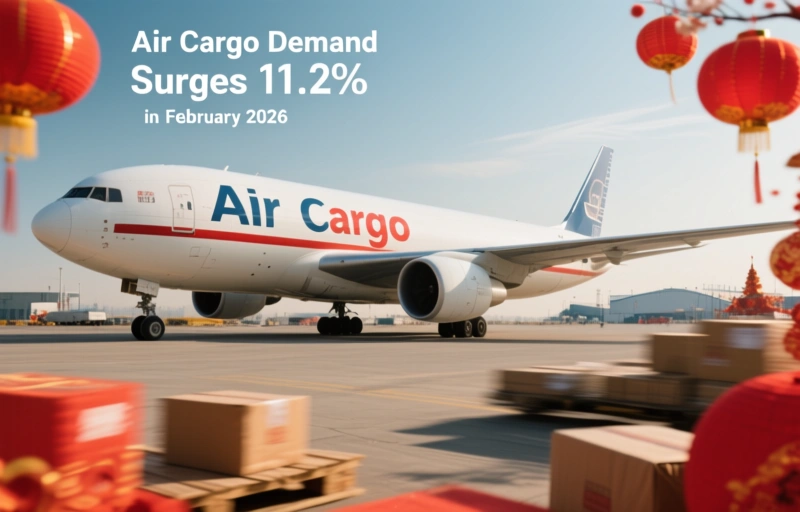
IATA data reveals global air cargo demand surged 11.2% in February 2026, outpacing capacity growth and signaling strong underlying economic activity in key trade lanes.
So, I was looking at the latest numbers from the International Air Transport Association, and wow—air cargo is having a moment. The data for February 2026 just dropped, and it's telling a pretty strong story. Honestly, it's the kind of growth that makes you sit up and take notice, even with all the usual economic noise out there.
Let's break down what these numbers actually mean. They measure demand in something called cargo tonne-kilometers, which is basically how much freight is moving and how far it's going. In February, that figure jumped by 11.2% compared to the same month last year. For international flights specifically, it was even higher at 11.6%.
### What's Driving This Surge?
Now, you might be wondering what's behind this jump. February always gets a bit of a boost from the Lunar New Year, right? Companies rush to move goods before the holiday shutdowns in parts of Asia. But even accounting for that seasonal push, the growth this year is solid. It suggests underlying demand is genuinely strong, not just a calendar blip.
On the other side of the equation, capacity—the available space to carry all this cargo—increased by 8.5%. For international operations, capacity grew by 9.8%. That's a healthy increase, but here's the thing: demand is growing faster than capacity. That usually points to a tight market, which can have all sorts of implications for shipping costs and logistics planning.
### The Bigger Picture for Global Trade
This isn't just about planes and packages. When air cargo is booming, it often signals something about the global economy. It means businesses are moving high-value, time-sensitive goods. We're talking electronics, pharmaceuticals, fresh produce—items where speed is worth the premium over sea freight.
A few key factors are likely at play here:
- **E-commerce Continues Its Run:** Online shopping hasn't slowed down, and consumers still expect fast delivery. That supply chain relies heavily on air cargo for parts of its journey.
- **Supply Chain Reconfigurations:** Some companies are still adjusting their strategies after recent global disruptions, sometimes opting for faster, more reliable air routes for critical components.
- **Seasonal Peaks:** Beyond Lunar New Year, other events and product launches can create concentrated demand spikes.
It's a reminder of how interconnected everything is. A decision made in a boardroom in the United States can translate to cargo being loaded onto a plane in Dubai or Frankfurt hours later. The efficiency of that system matters for everyone, from a small business shipping a prototype to a large retailer stocking shelves.
### Looking Ahead and What to Watch
Of course, the data snapshot is from February. The world doesn't stand still. The report alludes to geopolitical tensions—"the outbreak of war in the..."—which is a sobering reminder that this growth exists within a fragile context. Conflict and instability can reroute trade flows overnight, impacting capacity and costs.
For professionals watching this space, the key is to look beyond the single month. Is this a sustained trend or a temporary peak? Monitoring the coming months will be crucial to answer that. Will capacity expansions catch up to demand, or will the gap persist?
As one analyst put it recently, "The resilience of air cargo is a testament to its critical role in modern commerce, but its path is never linear." It's a dynamic sector, constantly responding to economic pulses, consumer behavior, and world events. For now, the February numbers offer a clear signal: the engines of global air freight are running hot.